Complete human malaria infection cycle to study parasite resistance to transgenic blocking mechanisms
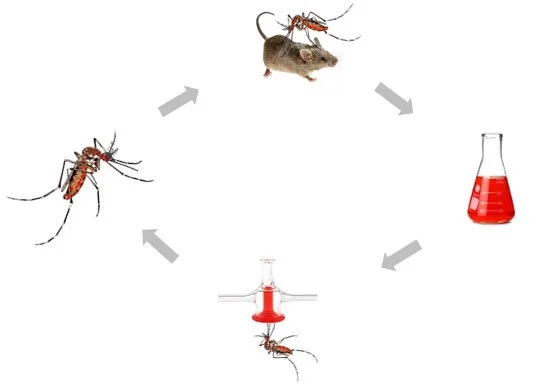
A critical challenge evaluating the suitability of transgenic mosquitoes for malaria control is determining whether Plasmodium falciparum can develop resistance to the genetically engineered blocking mechanisms used to render mosquitoes unable to transmit malaria.
Traditionally, assessing this risk requires controlled human malaria infection studies, which are logistically complex and costly. To address this, we have successfully replicated the complete malaria infection cycle using a 'humanized' mouse model according to previously established methodology. These mice are immunocompromised and possess chimeric livers with human hepatocytes, and are injected with with human red blood cells (RBCs), allowing the parasite to progress from sporozoite to gametocyte. This system enables us to cycle parasites through transgenic malaria-resistant mosquitoes multiple times to screen for the evolution of resistance—a vital step in evaluating the viability of transgenic strains as malaria control tools.
“Using transgenic mice technologies enable us to evaluate parasite resistance”
