Inventions filed for novel larvicidal pellets and attractive toxic sugar bait formulations
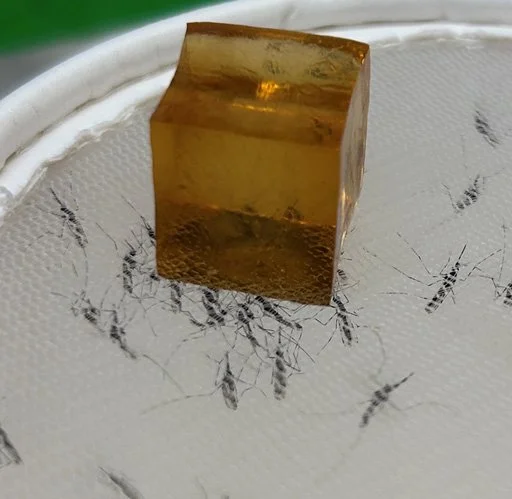
We have developed a new natural product-based formulation for our mosquito larvicidal Chromobacterium Csp_P active ingredient with a long shelf-life and stability (residual activity) after application in larval breeding water.

Larvae are attracted to and feed on the pellets, because of a natural attractant, resulting in death. A novel rehydratable biopolymer-based Attractive Toxic Sugar Bait has also been developed. It attracts mosquitoes for nectar feeding resulting in the ingestion of a lethal Csp_P dose. These two prototype products represent novel weapons against disease-transmitting mosquitoes.

George Dimopoulos

George Dimopoulos is a Professor in the Department of Molecular Microbiology & Immunology at Johns Hopkins Bloomberg School of Public Health, and Deputy Director of the Johns Hopkins Malaria Research Institute. His group investigates how mosquitoes’ innate immune systems and microbiomes can be harnessed to block transmission of malaria and arboviral diseases like dengue and Zika. With a BSc in microbiology (Stockholm University), a PhD in biology (University of Crete) and an MBA (Johns Hopkins Carey Business School), he brings a unique blend of expertise in molecular entomology, functional genomics, and translational research. His work is dedicated to turning basic insect-pathogen insights into novel, scalable strategies for vector-borne disease control.

Next
Next

Successful testing of malaria surveillance system in Cameroon